|
Public Lecture Highlights: The Relevance of the Non-Aligned Movement and the Global South in Indonesian Foreign Polic
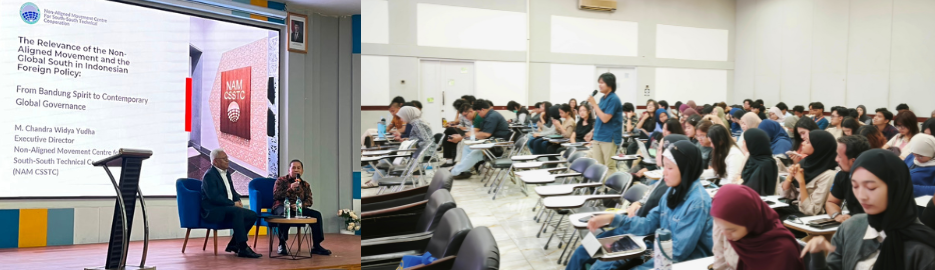
Bandung, Indonesia, 3 June 2026
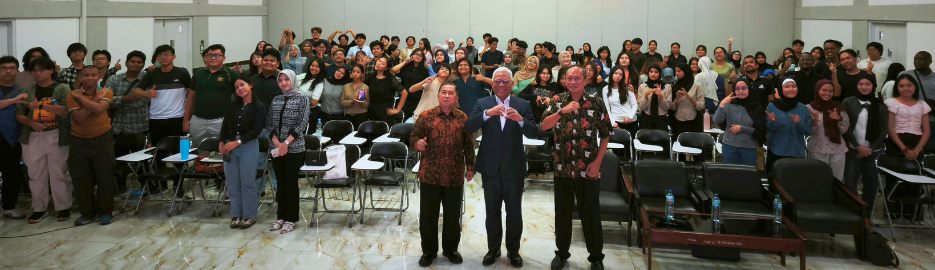
The Executive Director of the Non-Aligned Movement Centre for South-South Technical Cooperation (NAM CSSTC), Ambassador M. Chandra Widya Yudha, delivered an academic presentation at a Public Lecture hosted by the Faculty of Social and Political Sciences, Universitas Padjadjaran, on 3 June 2026 in Bandung. The lecture was held under the theme “The Relevance of the Non-Aligned Movement and the Global South in Indonesian Foreign Policy: From Bandung Spirit to Contemporary Global Governance”.
The lecture emphasized the continued relevance of the Non-Aligned Movement in addressing today’s global challenges, particularly in the context of increasing geopolitical tensions, widening global inequalities, and the fragmentation of the international order. It also revisited the historical foundations of NAM and highlighted the establishment of NAM CSSTC as an institutional effort to strengthen technical cooperation among countries of the Global South.
The lecture further underscored the growing significance of the Global South in global governance, driven by enhanced economic cooperation, strengthened multilateral diplomacy, and increasing calls for a more inclusive and equitable international system.
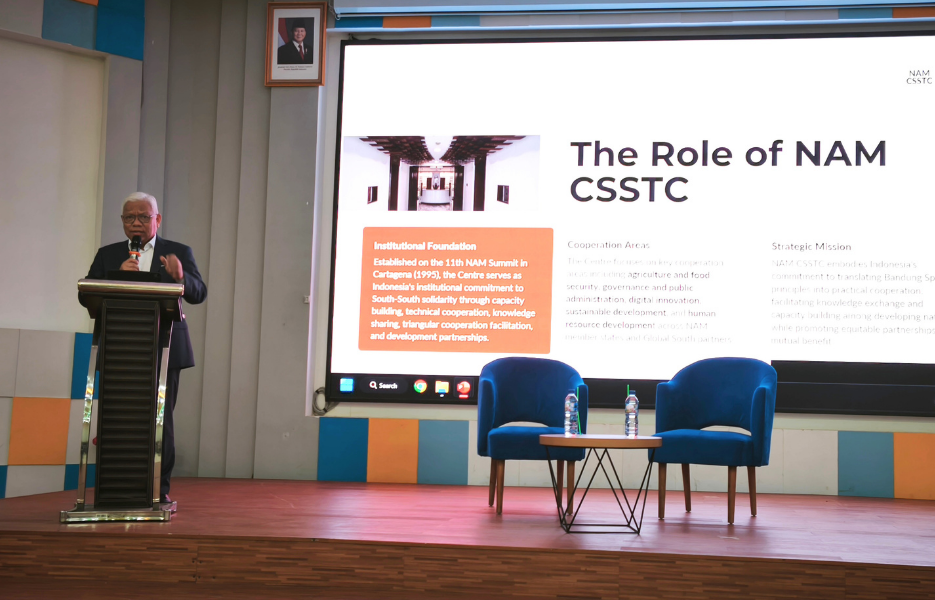
A key focus of the lecture was the importance of South-South Cooperation as a framework grounded in solidarity, equality, and mutual capacity-building. The role of NAM CSSTC was highlighted as a practical platform for knowledge exchange, training, and collaborative development among developing countries.
The lecture also acknowledged ongoing global and structural challenges that require collective attention. Future priorities for NAM and broader South-South cooperation were identified as including digital transformation, food and energy security, health resilience, and reforms toward a more just and inclusive global governance architecture.
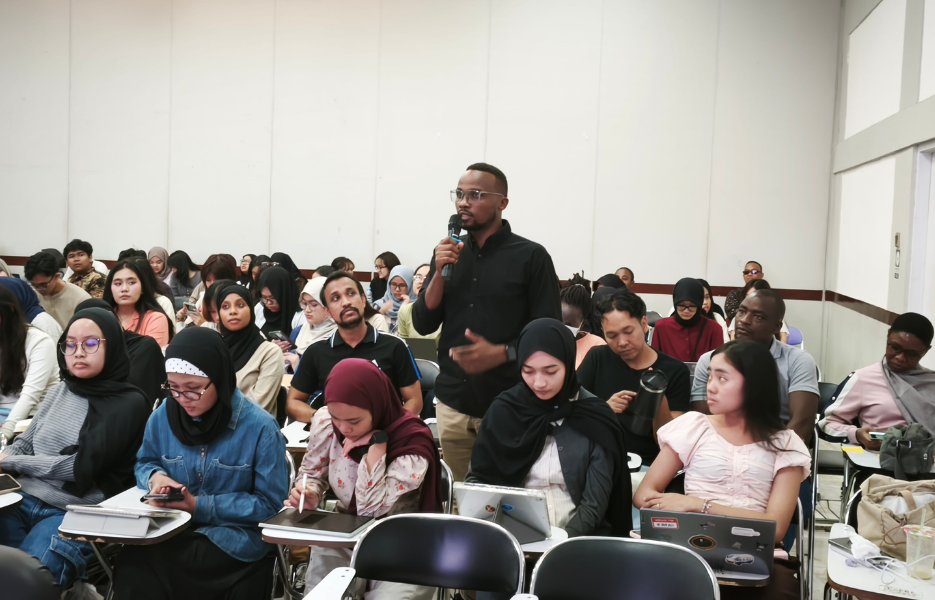
The lecture concluded with an active question-and-answer segment, during which the Executive Director responded to a number of questions from students. The discussion reflected strong engagement with contemporary global issues, particularly regarding the evolving role of NAM and Indonesia’s position within shifting geopolitical dynamics.
Overall, the lecture reaffirmed the continued relevance of NAM and South-South Cooperation as essential pillars in shaping a more balanced and inclusive international order.
|